Gateway to Kairos
The ancient Greeks knew time was not one thing. Behind two words — Chronos and Kairos — lived two entirely different experiences of being alive.
- "Who are you?"
- "Kairos, the all-subduer."
- "Why do you go on tiptoes?"
- "I am always running."
- "Why do you have wings on your feet?"
- "I fly with the wind."
- "Why is your hair long in front?"
- "For him that meets me to seize."
- "Why is the back of your head bald?"
- "Because none whom I have once passed may grasp me, even if he wishes."
The Time We Live By
For most of our lives, we live in Chronos.
Chronos is the measured time of ordinary life: the alarm clock, the calendar, the route to work, the message you need to answer before lunch, the dinner you promised to make it home for. It is the time that keeps things moving in sequence. It is how we coordinate with one another, keep our commitments, build families, run businesses, and make a life in common. Chronos is not a flaw in modern life. It is one of its necessities.
But measured time, by itself, can become thin. When every hour is spoken for, life can begin to feel all structure and no depth. The day is full, yet strangely hard to inhabit. We get through it. We keep up. We arrive where we are meant to be. And still, some part of us longs for moments that do more than pass efficiently.
The time of the calendar, the meeting, the school run, the opening shift.
Chronos keeps life moving. It gives shape to our responsibilities, our ambitions, and the ordinary rhythms we depend on. Chronos is not the enemy. It is how much of life gets built.
The Other Kind of Time
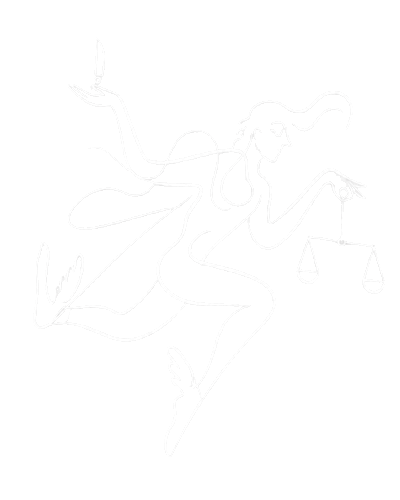
Not clock time — the kind that feels fuller than its duration.
A conversation that lingers. A room that softens you. A moment with friends that seems to widen rather than pass. The Greeks had a word for it.
Kairos is not the opposite of Chronos, and it is not an escape from responsibility. It is the meaningful complement to measured time — the moment that opens, the hour that somehow holds more than its length, the stretch of experience that feels fitted, vivid, and complete. Kairos is the conversation that lingers after the cups are empty. It is the breath that finally drops lower in the body. It is the feeling of being exactly where you are, with nothing missing from the moment.
At Lumin House, we think life is richest when there is room for both.
Where They Meet
That is why we built this house around a simple sequence: heat, cold, and commons. Cedar warmth that gathers the room. Cold water that clears the mind in an instant. A dim, unhurried place in between, where tea is poured, shoulders drop, conversation comes easily, and no one needs to perform. These are not just amenities. They are conditions. They help change the texture of time.
You do not come here to reject the life waiting outside. You come here to meet it differently. Because after a good visit, the clock still exists. The messages are still there. Tomorrow still needs something from you. But your pace changes. Your breath is steadier. Your attention is less scattered. You notice the people in front of you more fully. The day feels less like something happening at you, and more like something you are inside of again.
That is what we mean by Kairos. Not endless leisure. Not a fantasy of stepping outside life. Simply the return of meaningful time within it.
Chronos keeps life moving. Kairos reminds us why it matters. Lumin House is where they meet.
The Two Gods of Time
The ancient Greeks understood something we have forgotten: that time is not one thing. They had different words for it — and behind those words, entirely different experiences of being alive.
A vast serpent, coiled around the newborn world, turning it without rest.
In the Orphic creation stories, before the Olympians, before the Titans, Chronos emerged from the primordial waters: a serpent with three heads — man, bull, lion. He coiled around the cosmic egg and cracked the universe open, then began to turn it. The rotation of heaven. The machine that never stops.
The Greeks eventually merged Chronos with Kronos, the Titan king who swallowed his own children — and the metaphor stuck, because measured time does consume what it counts: the years, the seasons, the hours we forget to inhabit. The Romans gave him a scythe. The Renaissance gave him an hourglass and the name Father Time. We gave him a wristwatch and a calendar app.
You know Chronos. You live inside him. He is the alarm that pulls you from sleep, the meeting that runs over, the weekend that dissolves before it arrives. And he is necessary — he builds cities and companies, keeps commitments, keeps the trains on schedule. Most of life runs in Chronos, and it should. But when measured time becomes all we live in, presence starts to thin out.
And a question keeps surfacing — not loudly, but with the quiet persistence of a heartbeat: where do I go to come back to myself?
The Youngest Son of Zeus
A youth in flight — winged feet, a razor's edge, a forelock you must seize.
Lysippos cast him in bronze at Sicyon: a figure radiant with the bloom of life. Winged feet, because he is always running. A razor in his hand, because Kairos is the moment that cuts — decisive, clean, irreversible. A lock of hair over his brow, thick enough to grasp. And the back of his head, smooth as stone. Bald. Once Kairos passes, not even Zeus can pull him back.
The word kairos itself carries two origin stories, both from the body's knowledge. In archery, kairos was the narrow opening in armor — the aperture an arrow must pass through with force enough to reach its target. In weaving, it was the fleeting instant the shuttle could slip through the parted threads of the warp. Both say the same thing: kairos is the opening. The gap. The moment when what is closed becomes, briefly, passable — and everything depends on whether you are ready.
And trailing always behind this beautiful, fleeting god was a shadowy figure: Metanoia — the goddess of afterthought, cloaked and sorrowful, who embodied the regret of the missed moment. If you do not seize the opening, what remains is the ache of knowing it was there.
But here is what most people miss. Kairos was not merely a fleeting instant. He was a different dimension of time altogether. Where Chronos is quantitative — hours, minutes, schedules — Kairos is qualitative. He is time that has texture. Weight. Color. Temperature. Meaning. The hour that holds what a week cannot. The moment when the distance between you and the world collapses, and you are no longer counting time but living inside it.
This is Kairos: not slow time. Not relaxation. Not the absence of doing. Kairos is the world that opens when time changes substance — the way ice becomes water. The way silence becomes music. The way a room full of strangers becomes, without anyone trying, a kind of commons.
Kairos never disappeared. But inside days where every hour is spoken for, the opening gets harder to find — paved over, scheduled through, optimized out of reach. Chronos is not the enemy; it is simply not the whole of time. So we decided to build a door back.
What Happens When You Cross
Every bathing culture on earth discovered the same door independently. The Finns built it into smoke and stone. The Romans carved it from marble and steam. The Japanese soaked beneath open sky. The Turks wrapped it in tile and prayer. Every civilization arrived at the same truth: that the passage between heat and cold and rest is a threshold — a gateway out of chronos and into something else.
At Lumin House, the shift begins before your mind can name it. Light softens. Sound changes register — from the sharp, information-dense noise of the street to something lower, warmer, slower. Not silence. Something more like the acoustic equivalent of an exhale. Your nervous system reads the room before your intellect does, and receives a single message: you can stop holding.
Then heat finds you. The Aspen Theater Sauna wraps around you in layers. First the skin. Then the muscles beneath it. Then something deeper — the place where tension lives not because of what happened today but because of what happened years ago. Water hits stone. Steam rises. Your thoughts, which arrived in formation, start to scatter and drift like sparks from a fire. They don't disappear. They just lose their authority.
Then comes the cold. Sharp. Honest. Clarifying. Like the razor in the hand of the god. The plunge doesn't ask permission. It reaches past every story you tell about yourself and touches the animal underneath — the one that is alive, startlingly alive. For two or three blazing seconds, there is nothing in the universe except this. Just water. Just nerve. Just now. This is the moment Chronos breaks. The arrow passes through.
Then rest. Dim. Spacious. Unhurried. Here, time doesn't resume its march. It pools. You feel it in the weight of your limbs, in the slow metronome of your pulse, in the way a sip of tea lands differently when your body has been through fire and ice. You are not doing rest. Rest is doing you.
This is the Circuit — heat, cold, rest — not as a program to follow but as a current to enter. Self-paced. Self-directed. No right way through. Only your way through. And in the current, something else happens. You notice the others.
The World Between Us
There is a truth the wellness world is beginning to remember: you cannot fully regulate alone. The human nervous system is a social instrument. It reads the room. It calibrates to the bodies nearby. When the people around you are clenched, you clench. When they soften, you soften.
Kairos was not a hermit god. He ran through crowds. His altar stood at the entrance to Olympia's stadium — the most communal space in the ancient world. The Greeks understood what we keep forgetting: the deepest experiences of time are collective.
This is why Lumin House is not a collection of private pods. It is a commons. A place designed for the particular alchemy that happens when people are warm, quiet, unburdened, and near each other — without a single demand to perform. No forced conversation. No forced networking. No agenda. Just the ancient, radical simplicity of being human in the same room.
A nod from a stranger who just came from the same cold water. The strange intimacy of being anonymous and visible at the same time. The relief — bone-deep — of not having to explain yourself. This is the Commons. And it is the second engine of Kairos. Because when you are warm and safe and unhurried in the company of others, something in you remembers: this is how humans are meant to be together. The way light gathers when you put candles in the same room.
What You Carry Out
Kairos doesn't stay inside these walls. That is the part nobody expects. You leave and the clock starts again — of course it does. The parking lot, the phone, the schedule. But something has shifted in your instrument. The jaw is softer. The breath is lower. The space between stimulus and response — the space where your whole life actually happens — has widened by a fraction.
And that fraction changes everything. You are more patient at dinner. More present in conversation. More able to hear what the person across from you is actually saying. The people around you feel it — not because you've told them, but because your nervous system is broadcasting something different. Calm is contagious. Presence is contagious. Light is contagious.
We named it Lumin House because of this. Not because we illuminate you. Because you already carry the light. Every human does — a spark of purpose, brilliance, and potential that the modern world is exquisitely designed to dim. We didn't build a place that adds something to you. We built a place that stops taking it away.
And when people carry their light into the same room, something happens that Chronos cannot measure: the room gets brighter.
The forelock is there.
The opening is here.
Come as you are. Leave brighter.